The Mellow Tiger
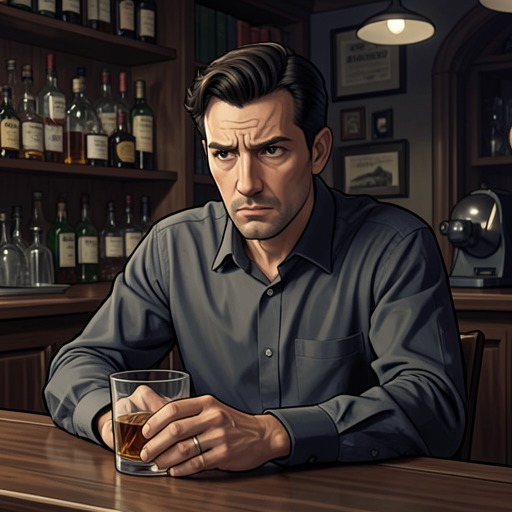
Needful ThingsThe Mellow Tiger is Henry Beaufort’s bar and home ground: a business with regular hours, familiar patrons, and a proprietor who knows when to refuse service. Its everyday role as a place to drink and gather gives it a particular force as Castle Rock’s disorder spreads. Hugh Priest is first expelled after a night of heavy drinking, but the conflict returns to the bar through a grievance about his keys and culminates in Hugh’s armed attack on Henry.
Setting and Local Role
The bar stands across the Tin Bridge from the part of town where Myra Evans lives. Henry owns and operates it, and his house is about a quarter of a mile away. Its schedule is markedly nocturnal: it closes at one in the morning, and Henry rarely gets up before that same hour in the afternoon. The distance between the business and his home is short, but the bar has its own daily rhythm, set by its late hours and the people who come through its doors.
The Tiger is also a known point of reference even to residents who have never entered it. Myra tells Leland Gaunt that she knows who Henry is and that he owns and runs the establishment, although she has never been inside. Gaunt uses that knowledge to direct her toward a trick on Henry. Later, a photograph Sally Ratcliffe sees shows a couple in a bar setting with beer on the table and a dance floor in the background; the location is the Tiger, a detail Sally herself does not know. The bar thus figures both as a real local business and as a setting whose associations can be used to influence people elsewhere in town.
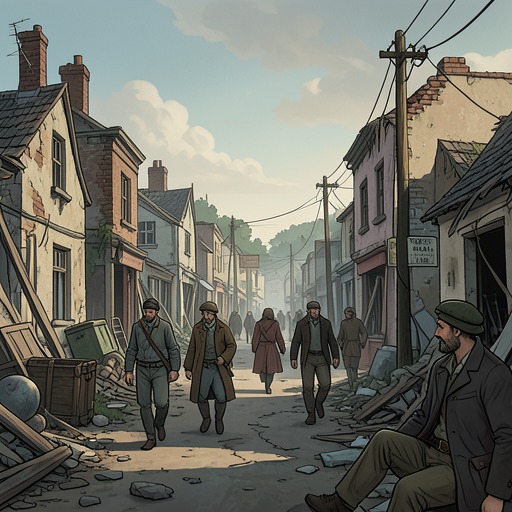
Its wider social position becomes visible in the way Castle Rock’s divisions touch its patrons and owner. Henry’s friend and fellow Catholic, Father John Brigham, is drawn into escalating tension with Albert Gendron over Casino Nite. The bar is not itself the cause of that religious conflict, but its owner and his circle belong to the network of relationships through which the town’s arguments travel.
Hugh Priest Is Turned Away
On an autumn weeknight, Hugh arrives after drinking steadily at the Tiger since late afternoon. Henry, the bartender as well as the owner, tells him to leave. Hugh has kicked the jukebox because a Rodney Crowell record keeps skipping; Henry has had enough of the damage and warns that he will call Alan Pangborn if Hugh refuses to go. The other patrons watch, wary of Hugh when he is drunk, while the confrontation makes plain that his behavior has already strained his standing in town.
Henry does not immediately return Hugh’s car keys. Hugh had handed them over as a precaution when he sat down at the bar, after many hours and eighteen beers. When Hugh demands them, Henry refuses, tells him he can come back to drink another time if he leaves now, and says he can collect the keys the next day. Hugh goes out without attacking anyone. For Henry, refusing service and keeping the keys are acts of restraint; for Hugh, they become a grievance that survives the night.
The first confrontation therefore establishes a consequential pattern: Henry sets a limit, invokes the law rather than taking physical action, and lets Hugh leave. Yet the apparently manageable dispute does not stay in the bar. Hugh later connects being cut off and deprived of his keys with damage to Henry’s car and a written complaint, making the earlier refusal part of the chain leading back to the Tiger.
A Prank and a Grievance
Gaunt’s instructions to Myra bring the bar into another strand of Castle Rock’s growing antagonisms. He asks whether she knows the bartender across the Tin Bridge, confirms that Henry owns the Tiger, and directs her to play a trick on him. Myra has never been inside the bar, but she knows its owner by reputation. The episode makes the Tiger a target selected through personal knowledge rather than a place Myra ordinarily frequents.
The retaliation against Henry’s car makes Hugh’s grievance visible before he returns to the bar. Henry finds a note beneath the windshield wiper, alongside damage to the tires and a scratch down the car’s side. The note complains that Henry cut Hugh off and kept his keys. Henry recognizes that only one recent customer fits the reference. His response is anger, but he also considers the consequences of acting on it: rather than retrieve the shotgun he keeps under the bar, he tells Billy Tupper what happened and recognizes that pursuing Hugh could put him in a holding cell. He decides to let the law handle the matter.
That decision gives the bar’s earlier rules a second meaning. Henry had refused Hugh service and held the keys as a precaution; now he understands that the same encounter has become part of a retaliatory dispute. Even amid mounting anger, he distinguishes protecting his property from taking revenge, and the Tiger remains the place where he chooses to speak through the proper authorities rather than act with the weapon he keeps there.
The Return and the Attack
On the last real day of Castle Rock’s existence, Henry arrives at the Tiger in a state that alarms Billy. Under ordinary circumstances, Billy regards Henry as a good boss, but he thinks refusing Henry the keys to his Pontiac would be futile in that mood. Billy tries to slow him down by offering to pour drinks. Henry disappears behind the bar, rummages there, and comes back holding a locked rectangular wooden box. The earlier choice to leave the shotgun in its place has not ended the danger: the dispute is now moving through the bar’s back rooms and possessions as well as its public space.
Hugh returns shortly before four in Lenny Partridge’s old Chevy Bel-Air and enters the Tiger wearing the fox-tail associated with his fixation. Charlie Fortin sees him go in. Inside, Hugh has come back to confront Henry. When Henry tries to reach the Sheriff’s Office by telephone, Hugh enters carrying a pistol; Billy is shot outside the bar and collapses near the doorway. Hugh then approaches Henry, and his first shots strike the backbar and the framed document above Henry before wounding him. The bar’s fixtures—its bottles, wall display, telephone, and counter—are no longer merely features of a drinking establishment but part of the scene of an assault.
The violence also reverses Henry’s earlier effort to contain the conflict. He had expelled Hugh, kept his keys, and later decided against taking the law into his own hands. Now the conflict returns to the place where it began, with Hugh’s grievance over being cut off and having his keys retained attached to the attack. The Tiger becomes the setting where an ordinary act of refusing service can no longer be separated from Castle Rock’s larger breakdown.
Significance
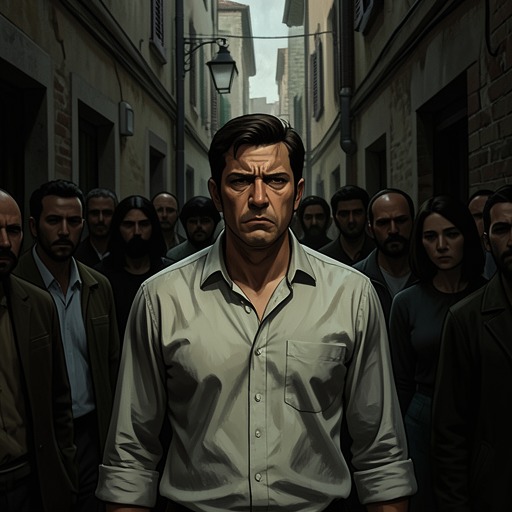
The Mellow Tiger’s importance lies in how much of the town’s social life converges on a small, locally owned business. Henry’s work as bartender and proprietor places him in the position of enforcing limits, while his friendships and affiliations connect him to disputes beyond the bar. People who have never entered it still know who runs it; others encounter it through stories, photographs, and instructions designed to provoke a response.
Its repeated appearances also mark a progression from routine to crisis. Hugh first leaves after Henry refuses him another drink and keeps his keys overnight. The resulting resentment surfaces in damage to Henry’s car, then draws Henry back to the bar with a weapon stored there, and finally brings Hugh through its door armed. The Tiger does not create Hugh’s fixation or the town’s wider violence, but it concentrates the consequences: a familiar gathering place becomes the point at which refusal, retaliation, and an attempted appeal to law converge.